How Accurate Are the Mental Health Tips on TikTok?
TikTok's rise, with the app now being used as a search engine for various purposes, especially among young users, shows that it has become more than just an entertainment platform.
TikTok's rise, with the app now being used as a search engine for various purposes, especially among young users, shows that it has become more than just an entertainment platform.
One of these uses is gathering insights from TikTok trends, which helps connect users by getting advice and help from other users facing similar challenges related to mental health and potential mental health conditions.
It would be very beneficial if much of the information didn't come from unreliable sources. This can lead to misdiagnosis, misunderstandings, and even people taking the wrong medication for a perceived condition.
To gain further insight into this, the PlushCare team recently analyzed 500 TikTok videos featuring the hashtags #mentalhealthtips and #mentalhealthadvice with medically trained professionals, and then evaluated the recommendations and advice for accuracy and potential risk.
The research showed that:
- While 83,7% of mental health advice on TikTok is misleading, 14,2% of videos contain potentially harmful content.
- Only 9% of those providing consultancy services on the platform are qualified in the relevant field.
- While 54% of the recommendations contained accurate information, 31% of the videos contained inaccurate information.
The research revealed that while there are some benefits, it's also helpful to consider the potential risks and ensure users don't take everything they see on the app as absolute truth.
TikTok Statistics Behind Mental Health
Today, approximately one billion people live with mental health problems. Yet, relatively few people worldwide have access to quality mental health services. In America, people pay as much as $100-200 per therapy session.
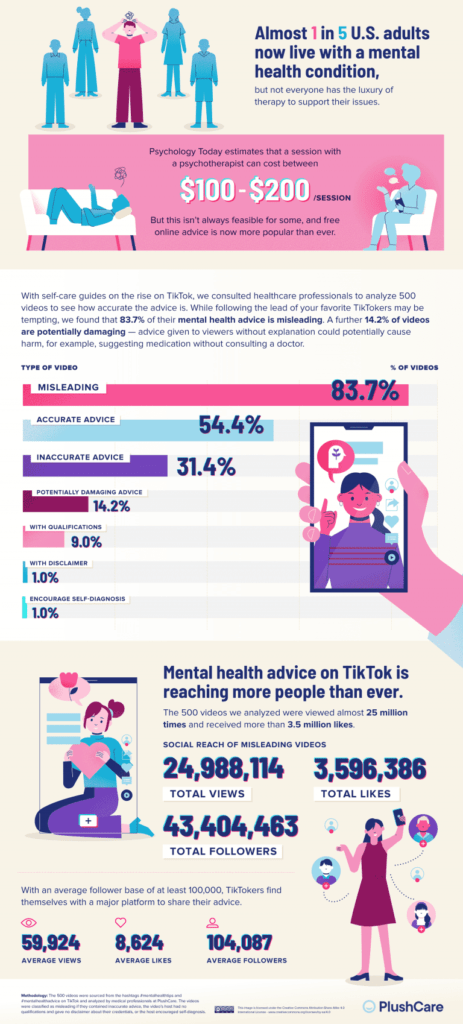
However, the analysis reveals that 83,7% of mental health advice on TikTok is misleading. Additionally, 14,2% of the videos contain potentially harmful content.
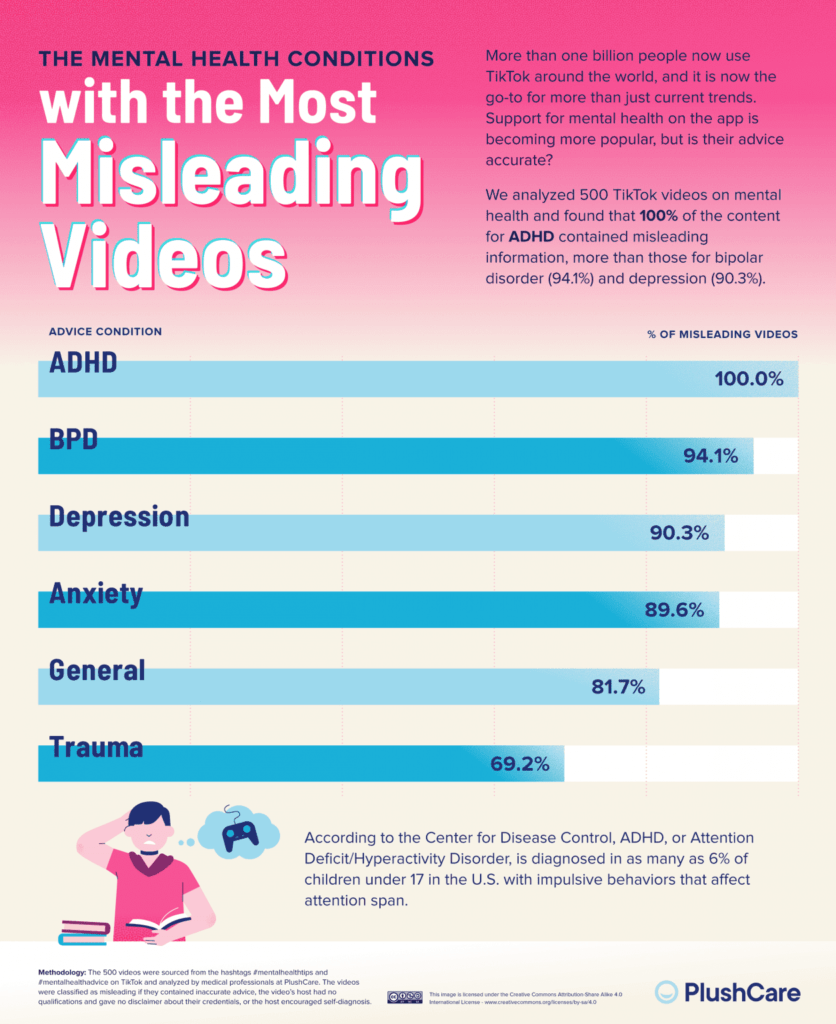
TikTok videos about Attention Deficit Hyperactivity Disorder, Bipolar Disorder, and Depression are largely misleading.
Healthcare experts at PlushCare have stated that 100% of the Attention Deficit Hyperactivity Disorder (ADHD) content contains misleading information.
According to data, Attention Deficit Hyperactivity Disorder (ADHD) videos on TikTok have currently been viewed over 17 billion times.
It was also found that content covering bipolar disorder (94,1% of videos) and depression (90,3% of videos) was highly misleading.
31% of mental health advice given on TikTok is wrong.
To determine the scientific accuracy of mental health advice on TikTok, board-certified doctors with an average of 15 years of experience and who each trained at one of the top 50 medical schools in the US analyzed 500 TikTok videos using the hashtags #mentalhealthtips and #mentalhealthadvice. Their analysis revealed that 31% of the mental health advice offered in the videos was incorrect.
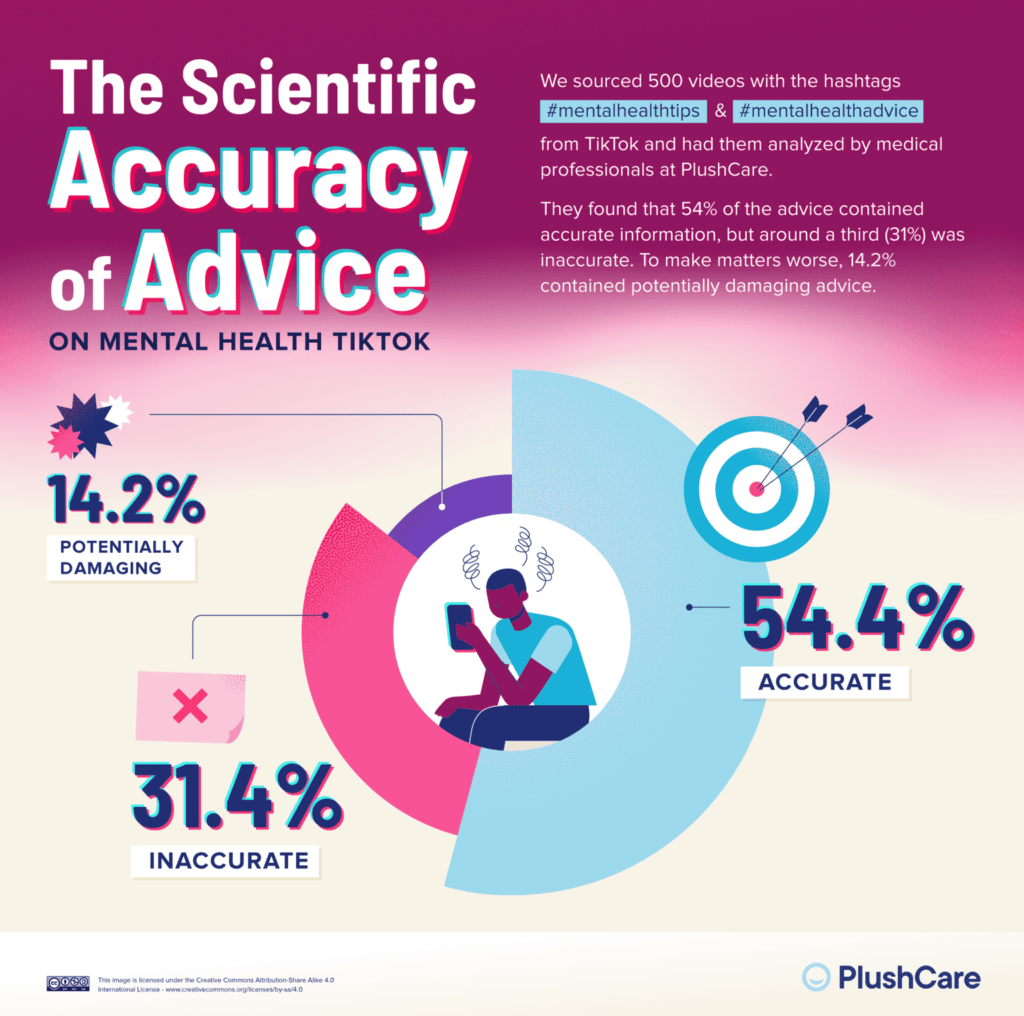
The results show that 54% of the advice contains accurate information. This includes content from both licensed professionals and content creators. The analysis also revealed that 31% of the videos contained misinformation, and 14,2% of the videos contained advice that could potentially harm some people.
The least accurate advice given on TikTok is related to trauma.
Even for those who have spent their lives training to understand mental health conditions, making an accurate diagnosis and recommending the right solutions to help people manage their symptoms can be challenging.
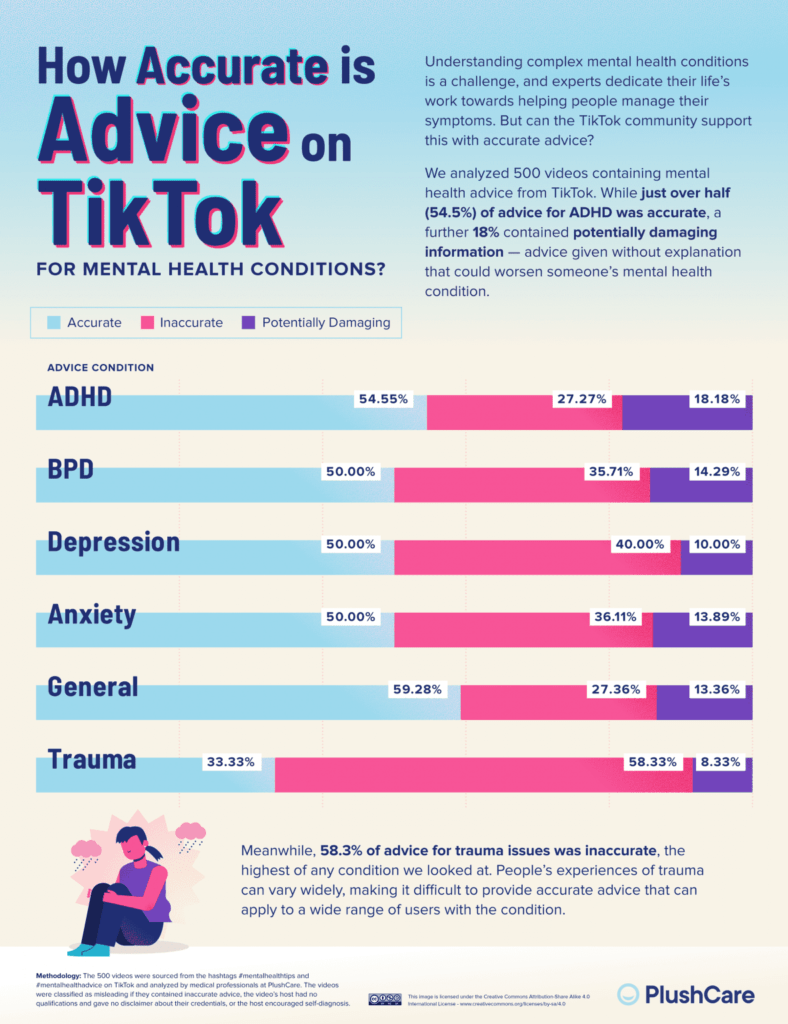
Expert analysis revealed that general mental health and well-being advice was 59,2% accurate. However, advice related to ADHD was the most accurate across all situations.
50% of all advice regarding Borderline Personality Disorder, Depression, and Anxiety Disorder is correct. The percentage of incorrect advice is 35,7%, 40%, and 36,1%, respectively.
The least accurate advice given on TikTok is about trauma. 58,3% of the advice given is wrong, which is the highest among all topics. Perhaps this is because there are different types and causes of trauma, and symptoms vary from person to person. Only 33,3% of the advice regarding trauma issues was correct.
Only 9% of TikTok content creators have a mental health-related qualification.
The demand for mental health content on TikTok has led to the emergence of a new type of social media content creator: the mental health content creator.
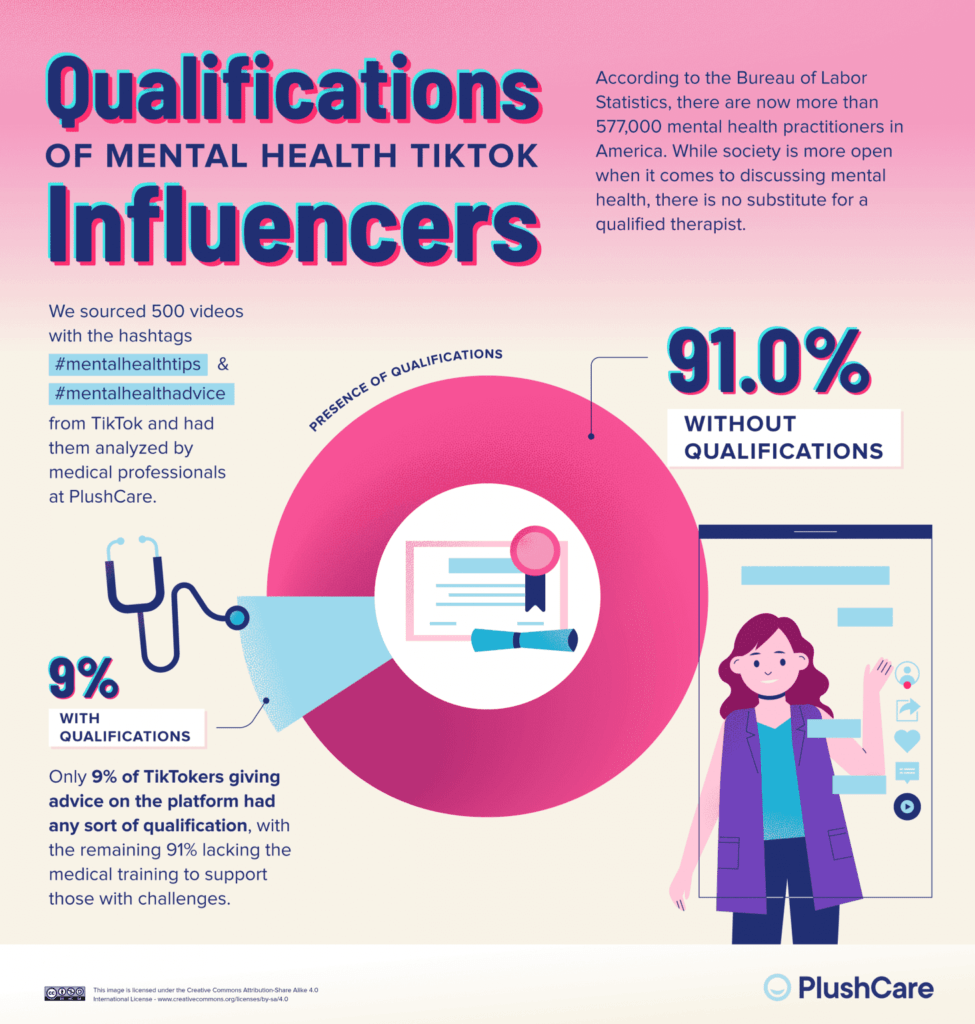
Analysis revealed that only 9% of TikTok users who provide counseling on the platform possess the relevant qualifications, while the remaining 91% lack medical training to support those facing challenges. According to the Bureau of Labor Statistics, there are more than 557.000 mental health practitioners in the U.S.
Only 1% of the videos include a statement of responsibility regarding mental health qualifications.
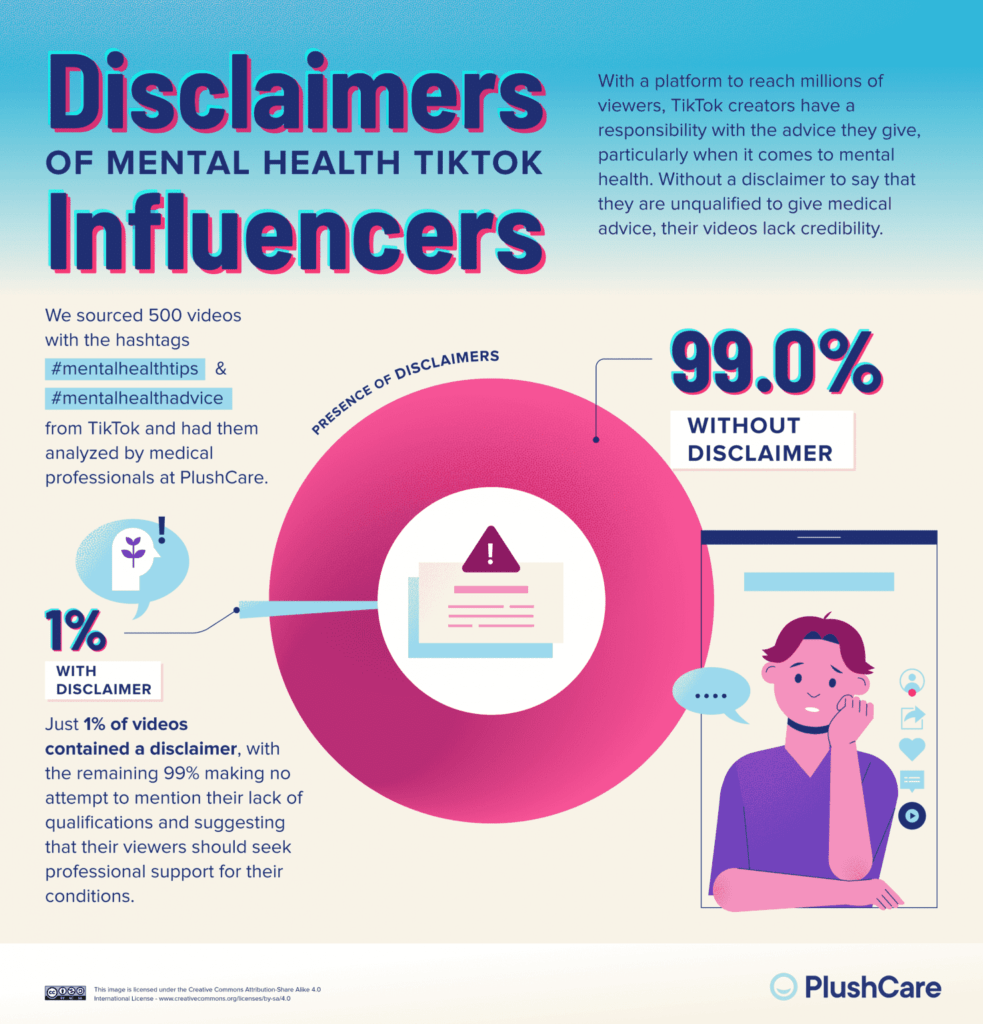
An analysis of 500 videos using the hashtags #mentalhealthtips and #mentalhealthadvice revealed that only 1% included a disclaimer, meaning 99% did not mention a lack of qualifications or medical experience. Furthermore, none of the videos encouraged viewers to seek professional help for their condition.
For just 1 TL per day, subscribe and gain unlimited access to all our content and support independent journalism! Subscribe Now!