New Stage in the Lawsuit Against Meta: The "Public Damage" Debate
The lawsuit filed against Meta in New Mexico, which focuses on child safety, has become a critical process that reopens the debate on the limits of responsibility for social media platforms.
The lawsuit filed against Meta in New Mexico, which focuses on child safety, has become a critical process that reopens the debate on the limits of responsibility for social media platforms.
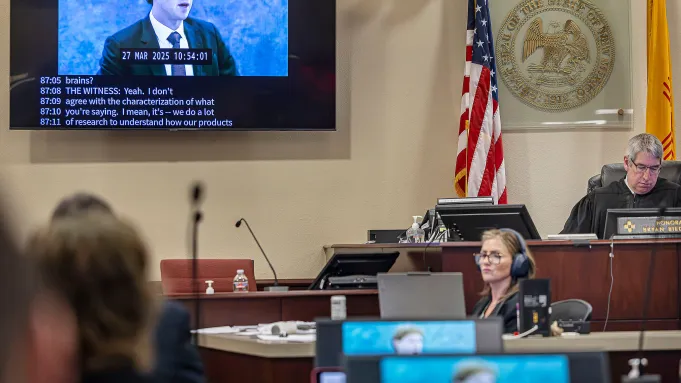
The lawsuit against Meta in New Mexico , which focuses on child safety, has entered a new and critical phase. In the initial stage of the trial, the jury found Meta guilty of failing to adequately protect children and misleading users about the safety of its platform, and ordered a fine of $375 million.
However, the case is not over with this decision. In the newly initiated second phase, the court will assess whether Meta's activities constitute " public nuisance ." This assessment could lead to a decision that goes beyond just a fine, potentially resulting in fundamental changes to how the company operates its platforms.
Possible Changes to the Court's Agenda
The regulations requested by New Mexico Attorney General Raúl Torrez in the case directly interfere with the functioning of social media platforms. These requests include introducing mandatory age verification systems for child users, making content algorithms safer for young people, and restricting certain features alleged to be addictive.
The proposals also include some rather ambitious measures, such as removing end-to-end encryption for underage users, limiting time spent on platforms monthly, and increasing the detection rate of child abuse content to 99 percent.
These demands involve not only technical changes but also structural transformations that could affect the fundamental working principles of the platforms.
The aim is to have an impact beyond just a fine.
While the initial $375 million fine is seen as a significant financial sanction, the state government argues it is insufficient. Attorney General Torrez states that fines alone do not create behavioral change when it comes to large technology companies, and that the real goal is to change the design of the platforms.
Therefore, the second stage represents a process that could directly intervene in Meta's business model. If the court rules that there has been "public harm," the company will not only have to pay compensation but may also be forced to redesign its products.
Meta's Defense and Response

Meta denies the accusations and argues that the proposed regulations are both technically impractical and legally problematic. The company specifically states that the high level of content moderation and age verification systems requested cannot be achieved with current technologies.
Meta also argues that such regulations could infringe on user privacy and pose risks to freedom of speech. The company has even considered the possibility of completely shutting down Facebook, Instagram, and WhatsApp services in New Mexico if its demands are met.
This suggests that the case may not be confined to a single state but could have broader implications.
Social Media Design and the Addiction Debate
Another key element highlighted in the case is the design features of social media platforms. State officials argue that features such as infinite scrolling, autoplay, and notification systems are deliberately designed to keep users on the platform longer, and that this has negative effects, particularly on young people.
According to these allegations, Meta's platforms are not merely tools for delivering content, but are also systems optimized to manipulate user behavior and potentially create addiction.
This approach also raises the question of whether the responsibility of technology companies is limited solely to content.
Legal and Regulatory Effects
The outcome of this case has the potential to set a precedent not only for Meta but for the entire technology industry. If the court rules that Meta's actions constitute "public harm," this could pave the way for similar lawsuits in other states and countries.
This process is also leading to a renewed debate about the limits of Section 230, the US law that provides extensive protection to internet companies. While this law largely prevents platforms from being held responsible for user-generated content, the case in question questions whether platform design also falls within the scope of responsibility.
National and Global Impacts
Although the case is being heard in New Mexico, the impact of the decisions could extend beyond state borders. Large technology companies typically operate their platforms in a globally standardized manner, not regionally. Therefore, it is considered that the changes mandated by the court may not be limited to just one state.
This is seen as a significant turning point in how social media platforms will be regulated in the future.
The lawsuit filed against Meta in New Mexico stands out as a process that could redefine the responsibility of technology companies regarding child safety. Following the initial hefty fine, the second phase creates a framework for decisions that could directly impact the company's operations.
The court's decision could have a decisive impact not only on Meta but also on how the entire social media ecosystem will be shaped.
For just 1 TL per day, subscribe and gain unlimited access to all our content and support independent journalism! Subscribe Now!