Quantum Computing: A Technology Race Europe Can Win?
Quantum computing has become one of the most critical areas of competition in the technology world in recent years, and while Europe has a strong scientific infrastructure in this field, it is trying to solidify its position in the global competition.
Quantum computing has become one of the most critical areas of competition in the technology world in recent years, and while Europe has a strong scientific infrastructure in this field, it is trying to solidify its position in the global competition.
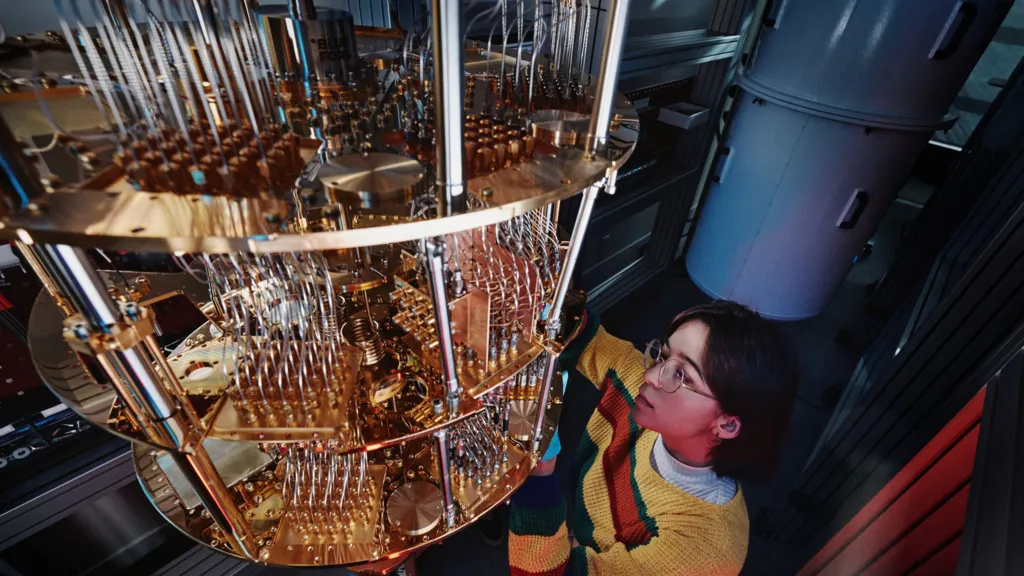
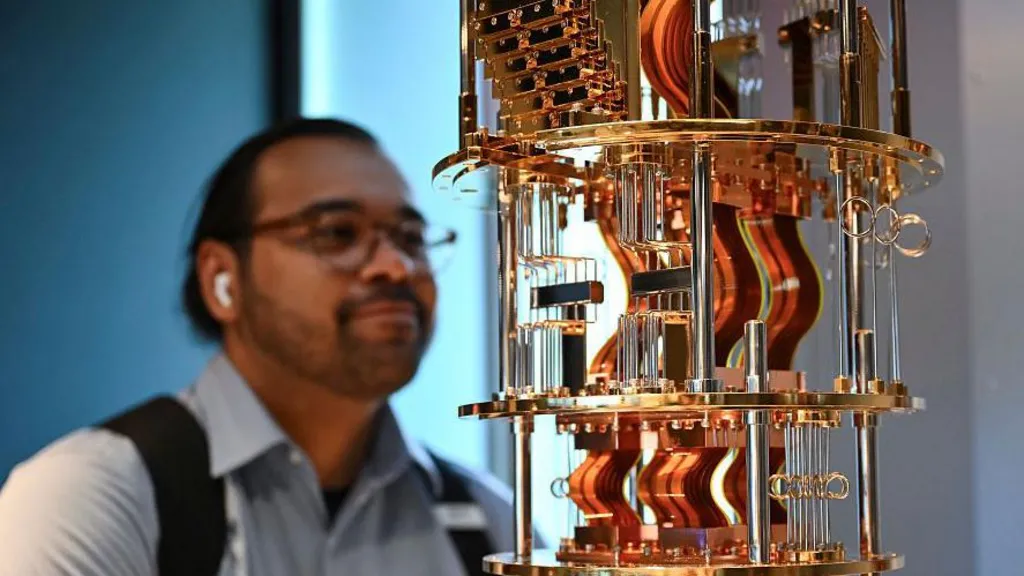
In a laboratory west of Paris, a technician named Rémi is making adjustments to a device.
This device is a cryostat consisting of gold and silver-colored cylinders connected by wires. A cryostat is a system that slows down molecular movement by lowering the temperature to very low levels.
In the cylinder at the very bottom of the device, the temperature drops to minus 273 degrees Celsius. At this temperature, the movement of particles almost completely stops, and the system is isolated from the outside world.
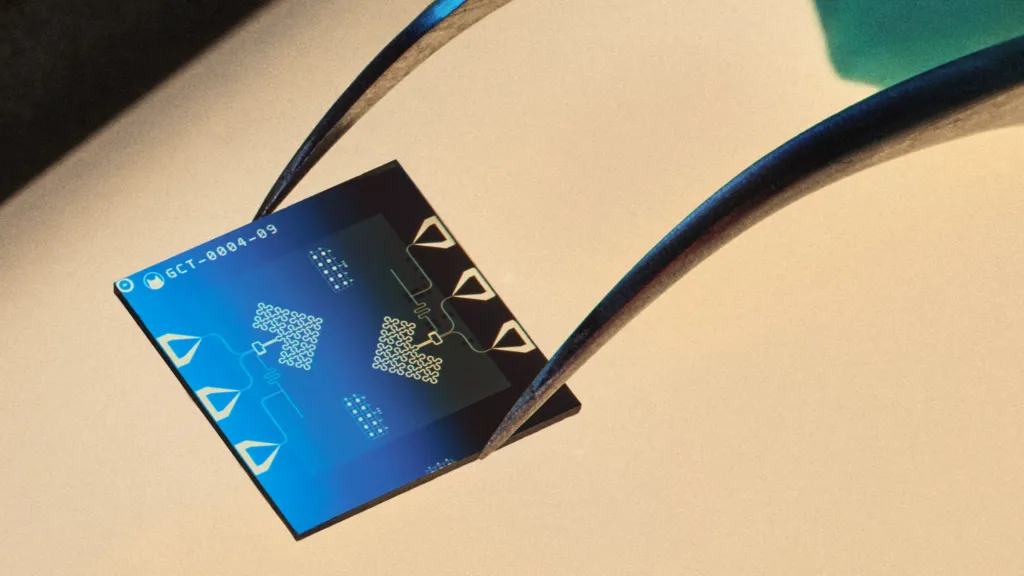
Inside this cylinder is a small box. And inside that box is a chip.
This chip is a structure in which the phenomenon of " quantum jump, " observed within the scope of quantum mechanics and occurring when particles change their energy levels, takes place.
All of the devices are quantum computers based on cryostat systems.
Alice & Bob Company
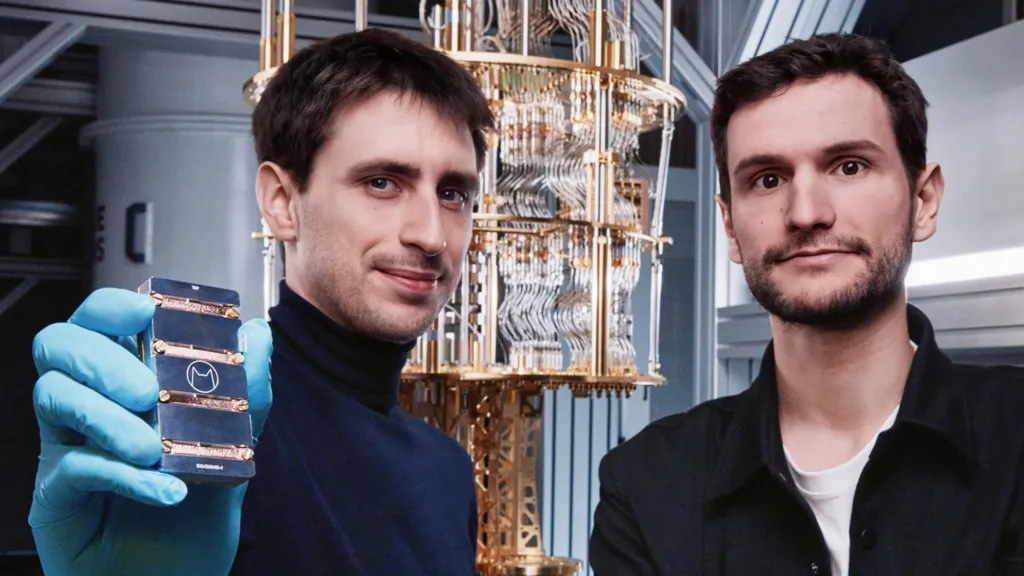
Alice & Bob is a French quantum computing company. The company will open a new facility north of Paris in the coming months, costing approximately $50 million. This facility will include an area for testing larger systems and a cleanroom for chip manufacturing.
According to the company's CEO, Théau Peronnin, quantum computers will become more reliable in the coming years and will increase processing power when used in conjunction with high-performance computers.
According to Peronnin, quantum computers will not only process information faster, but will also be able to solve problems that classical computers cannot.
The drug development process is given as an example. Quantum computers will be able to predict the effects and side effects of drugs more accurately by simulating the interactions between molecules.
Technological Potential
It is believed that if reliable and scalable quantum computers are developed, the first company to develop this technology will gain a huge advantage. This could create a "winner takes all" market.
The biggest problems with quantum computers are their error rates and the fragility of the system. Classical computers perform calculations using electrical currents on silicon chips. Quantum computers, however, use qubits as the unit of calculation. Qubits are based on the quantum properties of particles such as electrons or photons. However, qubits can lose their quantum state (decoherence) due to external environmental influences.
To solve this problem, many systems use thousands of physical qubits to create a single logical qubit and apply the majority method to correct errors. This method is expensive and requires large scale.
Alice & Bob uses a different technique. Systems called "cat qubits" are designed to automatically correct certain types of errors.
The company states that this method can reduce system complexity by providing continuous error correction. It is also reported that some large technology companies are turning to similar methods.
Quantum Companies in Europe
There are several important companies operating in the quantum field in France. These include:
- Pasqal
- Whenela
- Quobly
- C12
ranks.
In Europe, there are also companies such as Finland-based IQM and UK-based Oxford Quantum Circuits and Riverlane. Some of these companies have begun integrating quantum computers into high-performance computing infrastructures.
Current quantum computers still have limited capacity and are in their early stages in terms of practical use. According to company officials, current systems are not yet more powerful than classical computers.
France's advantages
France's strengths include:
- Advanced physics training
- Research institutions
- Nobel Prize-winning scientists
- Mathematics-based approach
is located.
It is noted that because this field is fundamentally based on mathematics, there is no significant technological advantage between countries.
One of the most important factors for Europe to succeed in this area is investment and capital accumulation. According to some assessments, Europe is in a strong position in this technological transformation and can seize this opportunity. However, long-term investment and coordination are required for this to happen.
All these developments show that quantum computers have moved beyond being merely a field of scientific research and have reached a critical point where they could determine economic power balances, technological leadership, and even the strategic independence of nations in the coming years. Europe's position in this race will depend on the scale of investments made, the speed of the transition from research to industry, and the success of coordination between countries.
For just 1 TL per day, subscribe and gain unlimited access to all our content and support independent journalism! Subscribe Now!